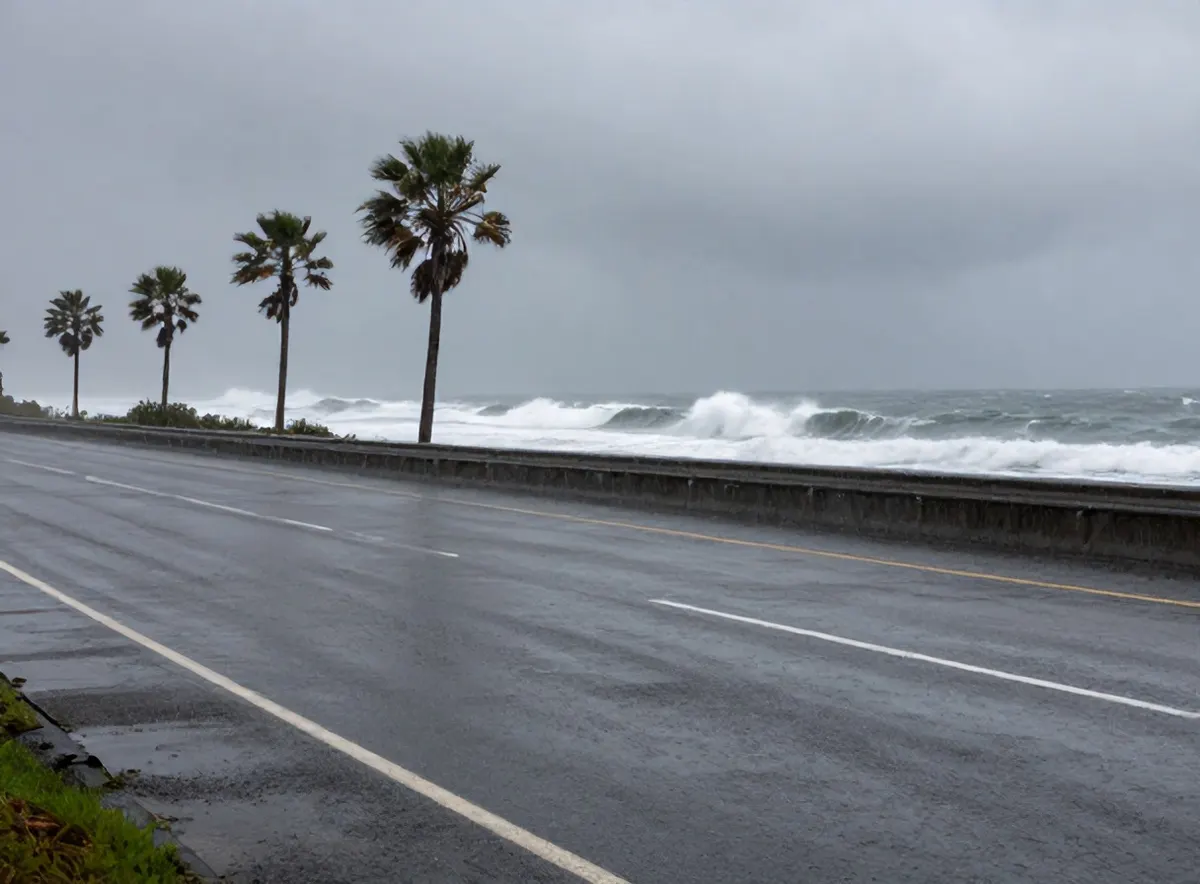
Taiwan implemented widespread closures of schools and offices on Friday while grounding hundreds of flights as Typhoon Champi brushed past the island. The storm brought torrential rains and powerful winds as it tracked nearby, creating severe weather conditions across multiple regions.
The storm weakened significantly before making its closest approach from the southwest. After previously peaking with maximum sustained winds of 298 kph (185 mph), Champi's wind speeds dropped to 155 kph (96 mph). Despite this decrease in strength, the storm maintains a massive radius of approximately 320 kilometers (200 miles), covering an area large enough to encompass most of Taiwan.
The transport sector experienced extensive disruption as the storm neared. According to the transport ministry, all 262 domestic flights across Taiwan were canceled, alongside 669 international flights. Authorities took preventative action across communities, with the government reporting that more than 2,600 residents were evacuated from vulnerable mountainous areas.
The severe conditions resulted in casualties across the region. Taiwan's fire department reported that one person died on Thursday after being swept away by large waves on Liuqiu, an island located off Taiwan's southeastern coast. Additionally, more than 170 people sustained injuries during the storm.
Taiwan's Central Weather Administration issued warnings advising coastal residents to avoid driving and outdoor activities, and to exercise caution regarding falling debris. How effectively can expanding storm systems be managed as tracking conditions evolve?