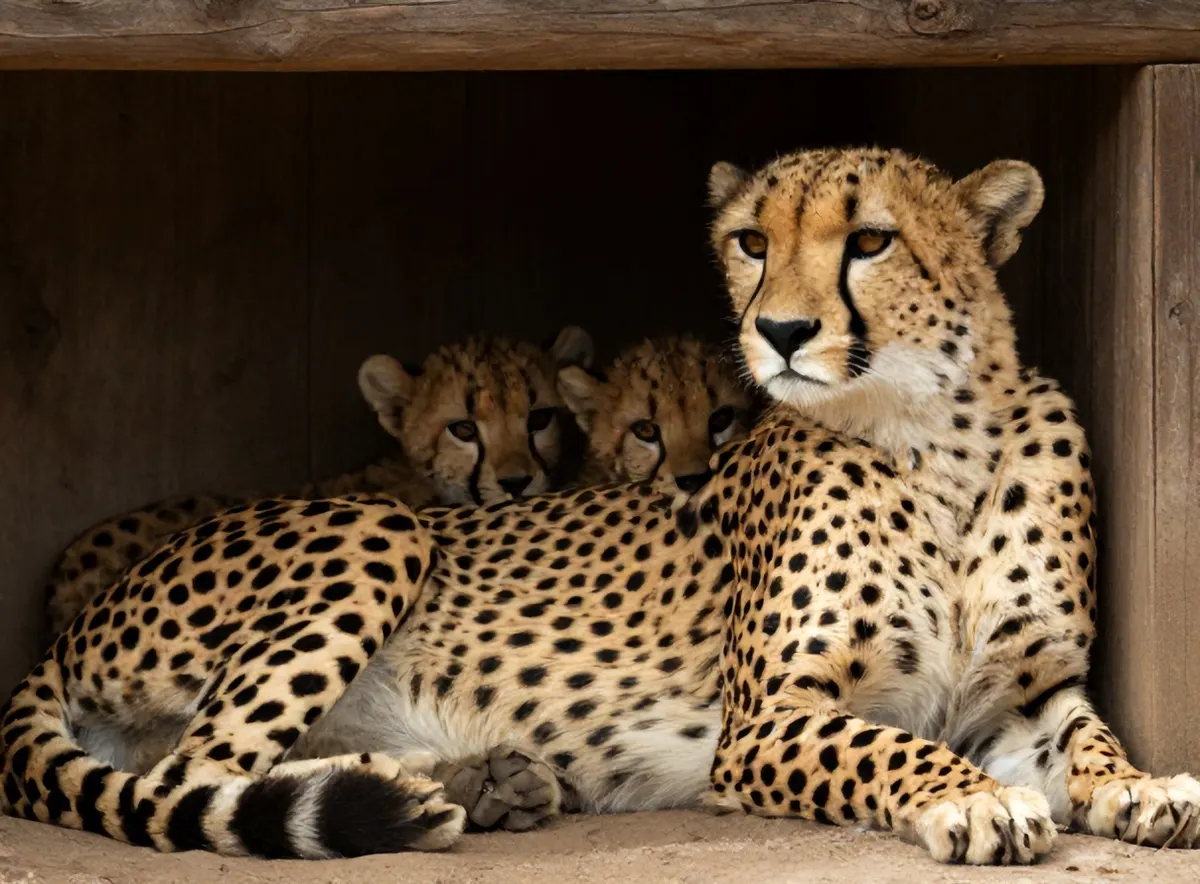
On October 5, a cheetah named Zura gave birth to five cubs at the Smithsonian’s Conservation Institute in Front Royal, Virginia. To share this milestone, the facility activated a live webcam that streams day and night directly from inside the den. The feed offers viewers an intimate perspective on early maternal care, including the vocal sounds of the newborn cubs as they exchange soft chirps, tiny purrs, and meows with their mother.
The public camera stream is not a separate tourist display; it is the exact same feed used by animal caretaker staff to monitor the mother and her litter remotely. Operating from the Front Royal facility, caretakers rely on these video tools to ensure the health and safety of the family without stepping directly inside the den habitat.
Unlike animals housed at the nearby Smithsonian Zoo in Washington, DC, cubs born at the Virginia conservation facility experience limited human contact early in their lives. This intentional operational model helps the cubs bond closely with their mother while shielding them from typical human disturbances during their most vulnerable developmental stage.
In addition to supporting family bonding, keeping human interaction minimal provides animal researchers with unique opportunities to conduct behavioral research that is simply not possible inside standard zoo habitats. Staff can closely track undisturbed maternal dynamics and early cub development around the clock via remote monitoring.
These observation efforts take place amid significant broader conservation challenges for the species, with only an estimated 7,000 cheetahs remaining in the wild. How might non-invasive monitoring tools continue to improve captive breeding and scientific research for vulnerable wildlife across the globe?