
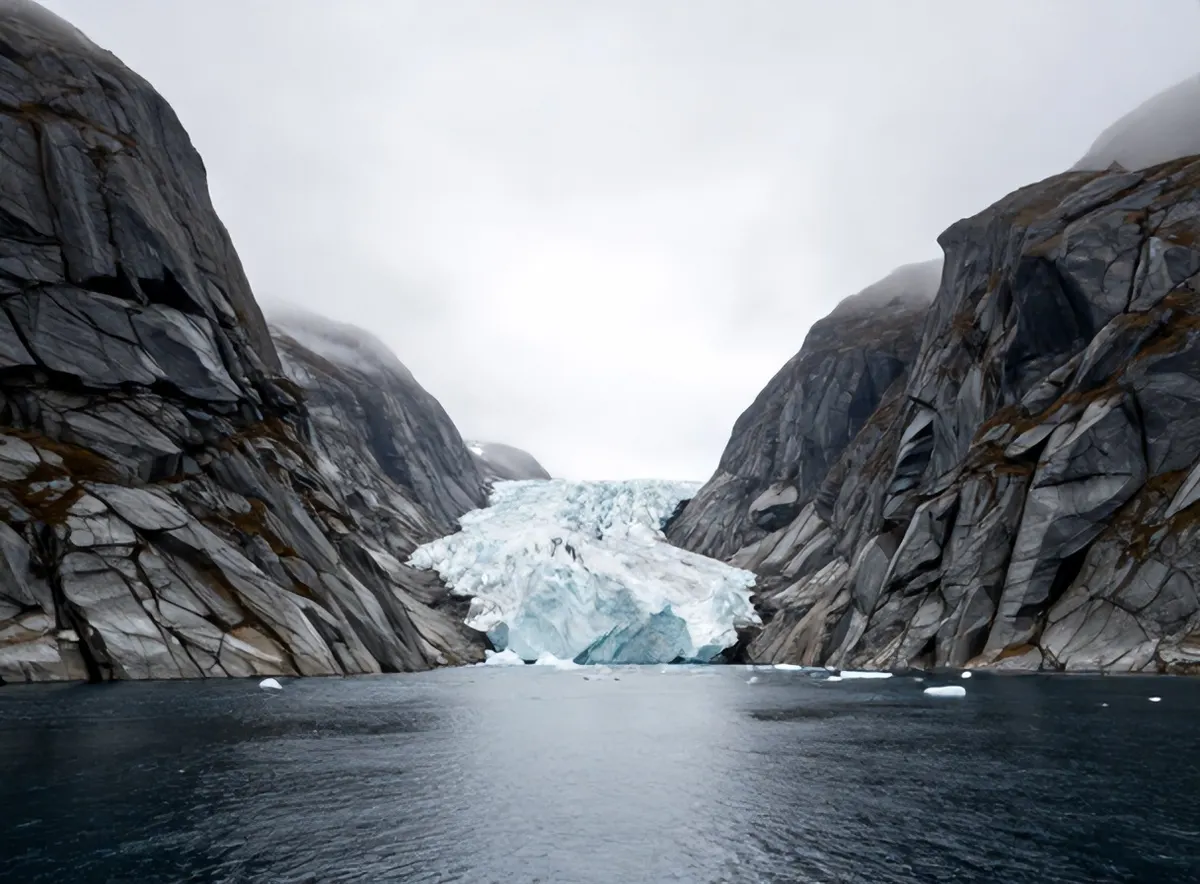
In August 2025, a massive landslide collapsed into an Alaskan fjord near the South Sawyer Glacier, generating the second-highest tsunami in recorded history. Just twelve hours after a tour vessel departed the area, millions of tons of rock crashed into the water, surging 1,580 feet up the opposite mountainside before traveling down the Tracy Arm inlet.
A new scientific study describes how the collapse was tied to retreating glacial ice. Coastal mountains in Alaska naturally experience frequent landslides due to tectonic uplift, heavy precipitation, and ice erosion. However, researchers point to an emerging pattern across Alaska, Greenland, and Norway, where major mountain slope failures happen directly at the terminus of shrinking glaciers.
While the exact mechanics remain incompletely understood, steep mountainsides appear to lose stability once supporting ice disappears. In the two months leading up to the Tracy Arm event, the glacier below the slope experienced rapid calving and retreated over a third of a mile, influenced by warm ocean waters and seasonal precipitation.
Researchers also identified thousands of small seismic tremors emerging from the slope in the days preceding the collapse. Hours before the failure, these tremors transitioned into a continuous hum of seismic energy, suggesting that dedicated monitoring systems could provide advance warning to maritime vessels and coastal communities. How might northern regions expand early warning networks to protect vulnerable Arctic waterways?